
The bottleneck moved
AI changed how fast companies are built, not what makes them succeed. Misfit on what actually matters in the AI era.
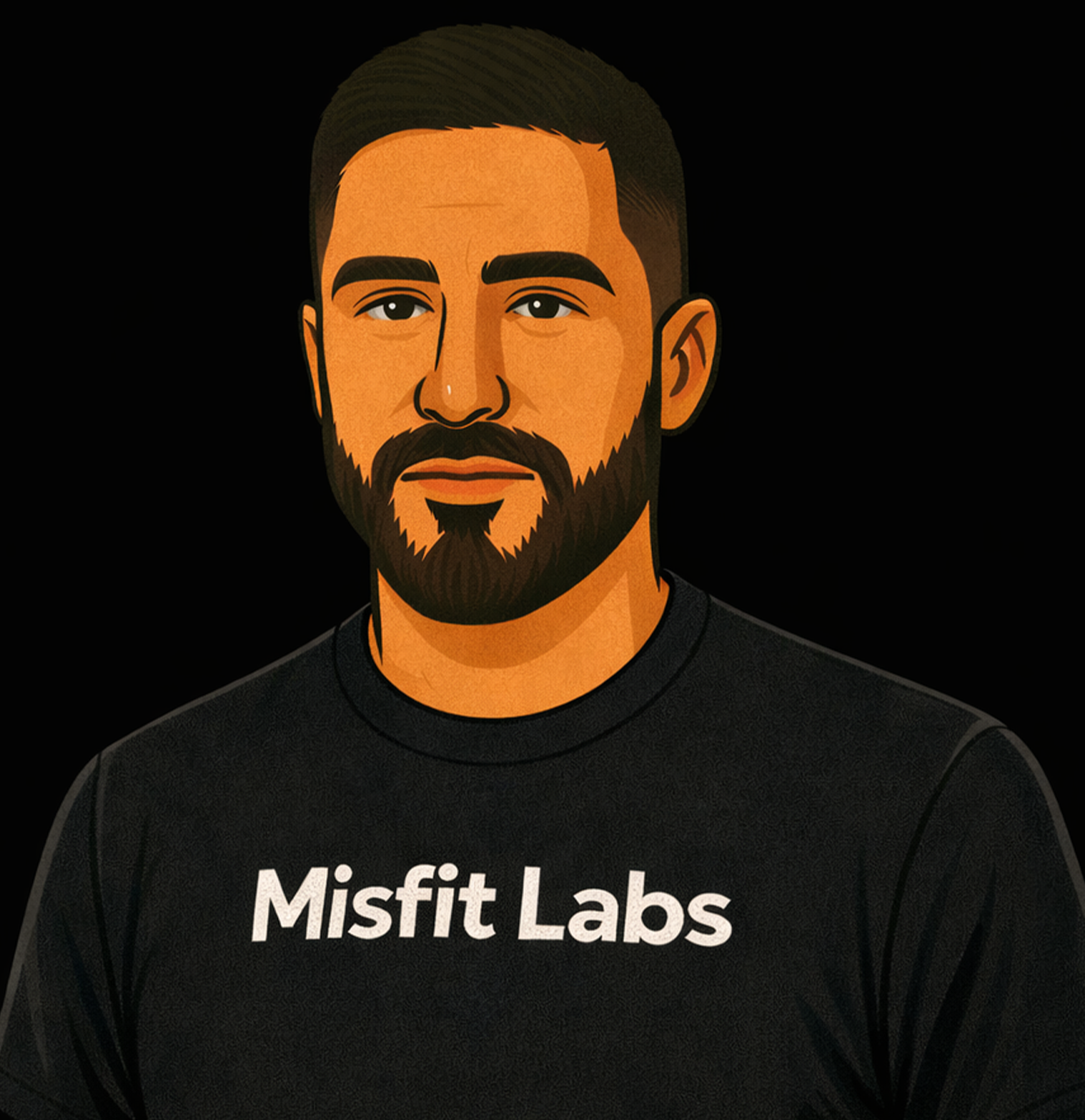
Notes from the Managing Partner of an AI-native venture studio on what AI actually changes about building a company, and what it doesn't
I'm the Managing Partner at Misfit Labs, an AI-native venture studio with five active companies across healthcare, infrastructure, and corporate innovation. We treat our own operations as the R&D lab for how we tell founders to build. For the last six months, we've been rebuilding the early stages of company-building around AI: opportunity validation, rapid prototyping, customer pilots. Some of it has worked better than we expected. Some of it has been a much harder problem than the discourse suggests.
AI has changed almost everything about how we build companies. It has changed almost nothing about what makes them work as companies. The gap between those two things is the most important and least discussed dynamic for founders right now.
This is what's actually shifted at Misfit, and what we've stopped pretending will shift soon.
What's changed
The capability per operator is the obvious one. One person with the right tools and the right context can now produce what required a small team three years ago. Not equivalent-looking work. Actually equivalent. Prototypes that move. APIs that respond. UIs you can hand to a customer.
The speed from idea to artifact has collapsed in parallel. We've moved companies from concept to functional MVP in under two weeks. That isn't marketing. That's measured against our own timelines from 2022.
The third shift is quieter but matters more. The cost of learning has gone to near zero. A non-engineer running a portfolio company can now ask, in real time, why an architecture was chosen, what the tradeoffs are, and what's likely to break at scale. The answers aren't always right, but they're usually directionally correct, and they compound. After a year of using these tools well, you're not an engineer. You become operationally fluent, and that turns out to be more useful than I expected.
The new skill, if there is one, is context. AI is only as useful as the specificity you give it. The founders getting real leverage from these tools aren't necessarily the strongest engineers. They're the ones who can describe a system, a workflow, a customer, a constraint, and a goal clearly enough that the tool has something to work with. Vague in, vague out.
What hasn't changed
This is the part of the essay almost nobody writes, and it's the part that actually matters.
The asymmetric insight that makes a venture worth building. AI is trained on consensus. It hands you the median take, confidently. The "why now" wedge that turns a startup into a real company is almost always non-obvious, derived from being deep enough in a problem space to see what the consensus misses. We've watched founders use AI to validate a thesis that was actually just a well-articulated version of the obvious answer. Validation isn't insight. The hardest part of starting a company is seeing what's true that other people don't yet see. That hasn't gotten any easier.
The second 90% of any product. AI gets you to a working prototype in days. It does not get you to a production system. Auth edge cases. Data migrations. Abuse vectors. Performance under real load. On-call rotations. Compliance reviews that take longer than the build itself. This is especially true for infra companies, and we have three of them. The demo-to-shipped gap hasn't compressed nearly as much as the discourse implies. We've seen a [two-week MVP] take [six more months] to become something an enterprise customer will actually run their workloads on. That ratio is roughly unchanged from 2022.
Knowing when to kill or pivot a company. With five active ventures and limited founder bandwidth, portfolio triage is constant. Which fire is existential, and which is noise? When does a struggling company need more time, and when does it need to wind down? AI gives us better dashboards. It does not make the call. That's still gut, pattern recognition from years of operating, and several hard conversations a quarter.
Founder selection. We take meaningful equity and serve as co-founders, which means our judgment on a person has to hold up for seven years. AI can synthesize a deck and prep diligence questions. It cannot read the pause when someone gets asked a hard question, cannot tell you who will still be standing at month eighteen, cannot replace the dinner where you find out who someone actually is.
Investor and partner relationships. Capital strategy, venture partner relationships, corporate development conversations, healthcare payer dynamics. These run on trust accumulated over years and decisions made in rooms AI isn't in. We've automated a lot of the prep, the synthesis, the follow-through. The relationship itself is unchanged.
The transition to actually selling at scale. We use AI heavily across sales: research, sequencing, prep, and content. What we haven't cracked, and what I don't think anyone has cracked yet, is a fully agentic B2B motion that doesn't degrade trust with the buyer. Especially in healthcare and enterprise infrastructure, the buyer wants a human accountable for the answer. AI accelerates the human. It does not replace them in the seat.
Where this leaves us
The bottleneck moved. It used to be building. Now it's knowing what's worth building, who to build it with, and what it takes to get that thing to actually work in the world. Most founders are worse at the second set of problems than the first, and AI doesn't help much with any of them.
This is good news for the right kind of operator. The companies that win over the next few years won't be the ones with the biggest engineering teams. They also won't be the ones who vibe-coded their way fastest to a demo. They'll be the ones with the clearest thesis, the best taste in what to ship, the highest trust with their customers, and the honesty to know which problems AI is actually solving for them and which ones they're still on the hook for.
AI made it cheaper to be wrong, faster. That's not the same thing as being right faster.